10 Things You May Be Recycling by Mistake (And Why You Shouldn’t Be)
This is a slightly different post for us, moving away from SEO related to a more general business related subject that was generated by an article that I read on the BBC website.
 Recycling is meant to help the planet, cut waste, and show that your business takes responsibility seriously. But here’s the awkward truth: many businesses are recycling the wrong things. Items that seem recyclable can actually contaminate recycling loads, damage machinery, or end up going straight to landfill anyway.
For small business owners, this matters more than you might think. Waste rules in the UK are getting stricter, and mistakes can cost money. In fact, a recent case saw a person fined for disposing of batteries incorrectly instead of using proper recycling channels. Situations like that show that good intentions aren’t always enough.
Recycling mistakes often come from confusion. Packaging looks recyclable. Bins are labelled vaguely. Staff assume something is “probably fine”. But contamination is a huge issue for recycling centres, and one wrong item can sometimes spoil an entire batch.
If you run a shop, office, café, warehouse, or any small business, it’s worth knowing what shouldn’t go in your recycling bin. Some items require special recycling schemes. Others should go in general waste. And a few should never be mixed with standard recycling at all.
Below are ten common things businesses and households often recycle by mistake, along with why they shouldn’t be in your recycling bin and what you should do instead.
1. Batteries
Batteries are one of the most common recycling mistakes. Many people assume they can just toss them into the recycling bin with plastic or metal. Unfortunately, that’s exactly what you shouldn’t do.
Batteries contain chemicals and metals that can be dangerous when handled incorrectly. When they get crushed or damaged inside recycling facilities, they can leak harmful materials or even cause fires. Lithium batteries in particular are a serious fire risk if they are punctured during waste processing.
This isn’t just a theoretical risk. Waste facilities across the UK have reported increasing numbers of fires caused by batteries being incorrectly disposed of. These fires can shut down operations, cause costly damage, and put workers at risk.
There has also been a recent case reported on the BBC website where someone was fined for failing to dispose of batteries correctly. The person threw away 23 AA batteries – which were inside children’s toys and not taken to a proper recycling point. Local authorities and recycling companies are becoming stricter about this because of the hazards involved.
For small businesses, batteries often come from wireless devices, handheld scanners, keyboards, tools, and electronic equipment. Staff may remove them and toss them into the nearest bin without thinking.
The correct approach is simple. Use dedicated battery recycling points. Many supermarkets, electronics shops, and recycling centres provide them. Businesses can also arrange specialist battery recycling collections.
Making a small battery collection box in your workplace can prevent mistakes and show staff exactly where they should go.
2. Coffee Cups

Disposable coffee cups look like paper, so people often assume they can go into paper recycling. Sadly, that’s usually wrong.
Most takeaway coffee cups contain a thin plastic lining inside the paper. This lining stops liquids soaking through the cup. The problem is that it also makes the cup difficult to recycle using normal paper processes.
Recycling centres typically separate materials in large batches. When cups with plastic linings mix with normal paper, they can interfere with the recycling process. In many cases, the cups simply get removed and sent to landfill.
This becomes a bigger issue in workplaces. Offices and small businesses can go through dozens of takeaway cups every day. Staff meetings, quick coffee runs, and delivery drivers all contribute to the pile.
Some specialist facilities can recycle these cups, but they require dedicated collection schemes. Unless your business specifically uses one of those programmes, putting them in paper recycling is usually incorrect.
A better option is to encourage reusable cups. Even a small change in workplace culture can reduce waste dramatically. Providing branded reusable mugs for staff can also double as a subtle marketing tool.
If your business sells drinks, it’s worth checking whether your packaging supplier offers cups designed for easier recycling.
3. Greasy Pizza Boxes
 Pizza boxes seem like obvious recycling candidates. They’re cardboard, after all. But when they’re covered in grease, cheese, and food residue, the situation changes.
Recycling facilities need clean, dry paper and cardboard. When cardboard becomes soaked with grease or food waste, the fibres can’t be processed properly. The contamination spreads through the batch and can ruin otherwise recyclable material.
This is why greasy pizza boxes are often rejected by recycling centres. They either end up being removed manually or sent to landfill.
Businesses sometimes produce large amounts of these boxes during staff lunches, events, or late work sessions. It’s easy for someone to fold the box up and drop it into the cardboard recycling bin without thinking.
A good rule of thumb is simple: if the box is clean and grease-free, it can usually be recycled. If it’s oily or covered in food, it should go in general waste or food waste where available.
Another option is to tear off the clean sections. The lid of the box is often still recyclable even if the base isn’t.
Small habits like this can make a surprising difference to the quality of recycling collected from your business.
4. Plastic Bags and Film
Plastic bags, shrink wrap, and soft plastic film cause major problems in recycling facilities. While they technically contain recyclable plastic, they are not suitable for standard recycling bins.
These materials are light and flexible. When they enter sorting machines, they can wrap around conveyor belts and rotating equipment. This forces staff to stop the machinery to remove them, slowing the whole operation.
In severe cases, plastic film can even damage equipment or cause mechanical failures.
For businesses that receive regular deliveries, this type of waste builds up quickly. Packaging film around pallets, protective plastic around products, and carrier bags from suppliers all add to the pile.
Instead of putting these items into mixed recycling, they should go to specialist plastic film recycling schemes. Many supermarkets collect plastic bags and film for recycling, and some waste contractors offer business collections.
Better still, reducing this type of packaging where possible can simplify waste management altogether.
5. Broken Glassware
Glass bottles and jars are widely recyclable, so it’s easy to assume that all glass belongs in the recycling bin. Unfortunately, that’s not the case.
Items such as drinking glasses, mirrors, oven dishes, and window glass are made differently from bottles and jars. They often contain additives that allow them to withstand heat or pressure.
When these types of glass enter bottle recycling streams, they melt at different temperatures. That difference can weaken newly produced glass and cause defects in the final products.
Because of this, recycling facilities usually reject them entirely.
Small businesses might accidentally recycle broken glasses from office kitchens, cracked mirrors from shop displays, or damaged glass cookware from staff kitchens.
The correct option is usually general waste or a specialist recycling service depending on your local council guidelines.
It’s worth reminding staff that just because something is glass doesn’t mean it belongs in the glass recycling bin.
6. Shredded Paper
Many businesses shred documents to protect confidential information. But shredded paper creates problems for recycling plants.
Paper recycling relies on sorting equipment that separates materials by size and weight. Shredded paper is extremely small and lightweight. It can fall through sorting screens or mix with other materials.
Another issue is contamination. Tiny paper fragments can spread across different recycling streams, lowering the quality of the material collected.
Because of this, some recycling facilities cannot process shredded paper in normal collections.
If your business generates shredded paper regularly, the best solution is to use a secure document destruction service that includes recycling. These companies collect the shredded material and process it separately.
Alternatively, some councils allow shredded paper if it is placed inside paper bags first. Always check local guidance before adding it to your recycling bin.
7. Food-Contaminated Packaging
Food packaging often looks recyclable. Plastic trays, sandwich wrappers, and takeaway containers are everywhere in workplaces.
The problem appears when they are covered in food residue. Oil, sauces, crumbs, and liquids can contaminate other materials in the recycling stream.
Recycling facilities aim to process clean materials efficiently. When packaging arrives covered in food waste, it often has to be removed or rejected.
In busy workplaces, people rarely rinse containers before throwing them away. As a result, recycling bins fill up with items that cannot actually be recycled.
A simple rule helps avoid this problem: rinse it or bin it. If packaging is reasonably clean, it can usually be recycled. If it’s heavily contaminated, it belongs in general waste.
Providing clear signage near workplace bins can help staff understand what to do.
8. Polystyrene Packaging
Polystyrene is commonly used to protect fragile goods during shipping. It’s lightweight, cheap, and effective at cushioning items.
However, it’s also one of the most difficult materials to recycle. Most recycling facilities cannot process it because it breaks apart easily and takes up huge amounts of space.
This means that putting polystyrene into standard recycling bins usually results in it being removed and sent to landfill.
Businesses that ship products often accumulate large amounts of it from incoming deliveries as well.
If you regularly deal with polystyrene packaging, the best approach is to ask suppliers about alternative packaging materials or returnable packing solutions.
Some specialist recycling centres accept polystyrene, but they are far less common than normal recycling services.
9. Disposable Cutlery
Plastic forks, spoons, and knives often end up in recycling bins after office lunches or events. Unfortunately, most of them cannot be recycled through normal collections.
The main issue is size and material type. Small plastic items are difficult for sorting machines to detect and separate correctly. They can fall through gaps or get mixed with other waste streams.
Even when they are made from recyclable plastic, their shape and size make them impractical for standard recycling processes.
For small businesses that run events, meetings, or staff kitchens, disposable cutlery can quickly pile up.
A better alternative is reusable cutlery in workplace kitchens. If disposable items are necessary, compostable options paired with food waste bins may be a better solution depending on local waste services.
10. Tangled Cables and Small Electronics
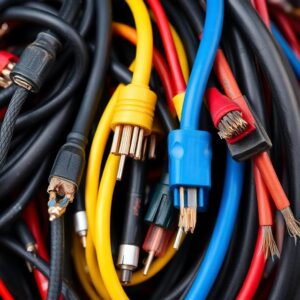 Old charging cables, headphones, and small electronic devices often find their way into recycling bins. After all, they contain metal and plastic.
But electronics are not suitable for standard recycling collections. They require specialised recycling because they contain multiple materials, including metals, plastics, and sometimes hazardous components.
Cables in particular can cause mechanical issues inside sorting machines. They wrap around equipment in the same way plastic bags do, forcing recycling plants to stop operations.
Small businesses often accumulate these items when upgrading equipment or replacing worn-out accessories.
The correct solution is to use WEEE recycling services (Waste Electrical and Electronic Equipment recycling). Many electronics retailers and recycling centres accept these items.
Setting aside a small collection box for unwanted cables and devices can make responsible disposal much easier.
Final Thoughts
Recycling is essential, but doing it incorrectly can create more problems than it solves. Contaminated recycling wastes resources, slows down processing facilities, and sometimes sends perfectly good materials to landfill.
For small businesses, improving recycling habits doesn’t have to be complicated. Clear bin labels, short staff reminders, and simple workplace policies can dramatically reduce mistakes.
It’s also worth keeping an eye on local waste guidance and national regulations. As the recent fine for incorrect battery disposal shows, waste management rules are becoming more strictly enforced.
With a little attention and a few small changes, your business can recycle more effectively and avoid costly mistakes.