Desk Lamps That Actually Work: A Simple Guide for Small UK Businesses
Bad lighting costs you time, comfort, and focus. The right desk lamp can make work easier, quicker, and far less tiring. Whether you’re packing orders, typing invoices, or crafting products, choosing the right lamp matters more than most small business owners realise.
Lighting is one of those things you only notice when it’s wrong. You get headaches, sore eyes, stiff shoulders, and suddenly your working day feels longer than it should. For small UK business owners, especially those working from home, studios, workshops, or shared offices, desk lighting is often an afterthought. You grab something cheap, plug it in, and crack on. But that choice quietly affects how well you work every single day.
A desk lamp isn’t just about brightness. It’s about how the light falls, what colour it is, how adjustable it can be, and whether it suits the task in front of you. A lamp that’s perfect for keyboard work can be awful for crafting. One that looks great on Instagram might be useless for detailed paperwork. And a lamp that’s too harsh or too dull can drain your energy without you even noticing.
This guide is written for real small business owners, not lighting engineers. No jargon. No science lectures. Just practical, everyday advice to help you choose a desk lamp that supports your work instead of getting in the way. We’ll look at different lamp types, daylight bulbs, task-based choices, and how to actually set your lamp up so it does its job properly. By the end, you’ll know exactly what to look for and what to avoid.
Why Desk Lighting Matters More Than You Think
Most people assume that as long as a room light is on, they’re fine. That might work for watching telly, but it’s not enough for focused work. Desk lighting [affiliate link] is about control. It lets you put light exactly where you need it, without lighting up the whole room like an operating theatre.
If you run a small business, chances are you spend long stretches at a desk. That could be answering emails, managing accounts, designing products, or doing detailed hands-on work. Poor lighting makes your eyes work harder. Over time, that leads to tiredness, headaches, and even neck and shoulder pain as you lean forward or squint without realising.
Good desk lighting helps you stay alert. It reduces eye strain and makes details easier to see. That matters whether you’re threading a needle, checking product labels, or staring at a spreadsheet. When your eyes are comfortable, your brain follows. You make fewer mistakes and you don’t feel as drained at the end of the day.
There’s also a productivity angle. Bright, well-placed light helps signal to your brain that it’s time to focus. Dim, yellow light tells your body it’s time to relax. That’s great in the evening, but not ideal when you’re trying to get orders out or finish a client project.
For home-based businesses, desk lamps are even more important. You’re often working in rooms that weren’t designed as offices. Lighting might be coming from odd angles, shaded by furniture, or changing throughout the day. A good desk lamp gives you consistency. It creates a reliable working environment, no matter what the weather or time of day is doing outside.
In short, desk lighting isn’t a luxury. It’s a basic tool, just like a decent chair or keyboard. Get it right, and your workday feels smoother. Get it wrong, and everything feels harder than it needs to be.
Understanding the Main Types of Desk Lamps
Walk into any shop or browse online, and desk lamps can feel overwhelming. There are hundreds of styles, shapes, and prices. The good news is that most desk lamps fall into a few simple categories, and each one suits different types of work.
Adjustable arm lamps are the classic choice. They usually have one or more joints that let you move the light up, down, and sideways. These are brilliant for tasks that change throughout the day. If you switch between typing, reading, and hands-on work, an adjustable lamp gives you flexibility. You can pull it close for detail or push it back for general lighting.
Fixed head lamps look sleek and tidy, often with a modern design. They don’t move much, if at all. These work best if your desk setup never changes. If you always sit in the same spot doing the same task, they can be fine. But for mixed-use desks, they can feel limiting.
Clamp lamps attach to the edge of your desk or shelf. They’re great for saving space, especially in small home offices or craft rooms. They also allow for good positioning, as the arm can often extend over your work area. Just make sure your desk edge is sturdy enough to support it.
Magnifying lamps are popular with crafters, jewellers, and anyone doing very detailed work. These combine a bright light with a built-in magnifier. They’re not ideal for general desk work, but they’re excellent for precision tasks where seeing tiny details matters.
LED panel lamps spread light evenly across a wider area. They’re good for reducing shadows and glare, especially for keyboard and screen work. Many of these come with brightness and colour controls, making them very versatile for modern workspaces.
The key thing to remember is that looks come second. A lamp can be beautiful and still be useless for your work. Always start by thinking about what you actually do at your desk, then choose a style that supports that.
Daylight Lamps and Why Colour Matters
One of the most confusing parts of choosing a desk lamp is the talk about “daylight”. It sounds like marketing fluff, but it actually matters more than people think.
Daylight lamps [affiliate link] produce a whiter, brighter light that’s closer to natural daylight. This type of light helps colours look more accurate and reduces eye strain. If your work involves colour matching, product photography, drawing, sewing, or design, daylight lighting is a huge help.
For keyboard and screen work, daylight lamps can help you stay alert, especially during darker months. They cut through that gloomy, mid-afternoon slump that so many UK business owners know well. The light feels cleaner and sharper, which makes text easier to read.
Warm yellow light, on the other hand, is relaxing. It’s great for evenings and living spaces, but it can make it harder to focus during work hours. Colours can look muddy, and your eyes may struggle more with detail.
Some modern desk lamps let you switch between light colours. This is useful if your desk doubles as a personal space in the evening. You can use bright daylight tones for work, then switch to warmer light when you’re winding down.
It’s also worth noting that not all “daylight” lamps are equal. Cheaper ones can feel harsh or flickery. Look for lamps that describe the light as steady and comfortable, not just bright. Your eyes should feel relaxed, not dazzled.
Choosing the right light colour isn’t about being fancy. It’s about matching your lighting to how your brain and eyes work. When the light suits the task, everything feels easier.
Choosing the Right Desk Lamp for Your Type of Work
This is where most small business owners go wrong. They buy one lamp and expect it to suit everything. In reality, different tasks need different lighting.
For keyboard and computer work, you want even, soft light that doesn’t create glare on your screen. LED panel lamps or adjustable lamps with a wide light spread work well here. Position the lamp so it lights your desk, not your screen. The goal is to reduce contrast between the screen and the surrounding area.
For crafting and hands-on work, brightness and accuracy matter more. Adjustable arm lamps or magnifying lamps are ideal. You want light that can be pulled close and aimed directly at what you’re doing. Daylight bulbs are especially helpful here, as they show true colours and fine details.
For paperwork and reading, you need clear, focused light without harsh shadows. A lamp with a shade that directs light downward is a good choice. Again, adjustability helps, as you can move the light as papers shift around.
For creative work like illustration or product design, consistency is key. Flickering or uneven light can throw you off. Choose a lamp known for steady output, and consider daylight tones for colour accuracy.
If your desk is used for multiple tasks, flexibility matters more than perfection. An adjustable lamp with brightness controls is often the best compromise. It lets you adapt without constantly swapping equipment.
The right lamp should fade into the background. You shouldn’t be thinking about it while you work. If you’re constantly adjusting it or feeling uncomfortable, it’s not doing its job.
Setting Up Your Desk Lamp Properly
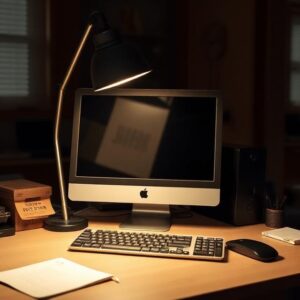
Even the best desk lamp can be useless if it’s set up badly. Placement matters just as much as the lamp itself.
Start by placing the lamp on the opposite side of your writing or working hand. This reduces shadows. If you’re right-handed, the lamp should usually be on the left, and vice versa. That simple change can make a huge difference.
Keep the light angled down towards your work, not straight into your eyes. The light source should never be in your direct line of sight. If it is, you’ll end up squinting or leaning away without realising.
For screen work, avoid shining light directly onto the screen. That causes glare and reflections. Instead, light the area around the screen so your eyes aren’t constantly adjusting between bright and dark.
Adjust the height so the light spreads evenly. Too close, and it’s harsh. Too far away, and it’s pointless. Take a few minutes to tweak it until the light feels comfortable.
Finally, think about your wider room lighting. Desk lamps work best alongside gentle background light. Working in a pitch-dark room with a bright desk lamp can strain your eyes.
A good setup feels natural. Once it’s right, you won’t need to keep fiddling with it.
Common Desk Lamp Mistakes to Avoid
One of the biggest mistakes is buying based on looks alone. A lamp can match your brand colours and still be awful to work under.
Another common issue is going too cheap. Very cheap lamps often flicker, overheat, or break quickly. They can also produce uncomfortable light that tires your eyes.
Ignoring adjustability is another trap. Fixed lamps lock you into one setup, which rarely suits a full working day.
Finally, many people forget that their needs change. What worked when you started your business might not suit you now. It’s okay to upgrade.
Buying Tips for Small UK Businesses
Before you buy, think about your main task. Buy for that first.
Look for solid build quality and smooth movement. A lamp that droops or wobbles will drive you mad.
Choose comfort over clever features. Fancy controls are useless if the light itself isn’t pleasant.
And remember: a desk lamp is a work tool. It should earn its space, but not take it over.
About the Author
John K Mitchell has been optimising websites for search engines since 1997, which was before Google even started. With a background in programming, John realised early on that by analysing results he could work out, or at least make an educated guess, as to why certain sites ranked where they did. Since then, he has worked on thousands of websites, often achieving strong, long-lasting results for small and growing businesses.